
[ad_1]

By Nikit Popli and Neetu Singh
In a strategic move to accelerate India’s vision of becoming a global electronics manufacturing hub, the Union Cabinet has approved a Production-Linked Incentive (PLI) scheme worth ₹22,919 crore for the manufacturing of electronic components vide Notification F. No. W/49/2024-IPHW dated 08 April 2025. This game-changing initiative targets critical segments such as sub-assemblies, foundational electronic components, and a resilient supply chain covering components like Printed Circuit Board, SMD passives, Li-ion cells and parts such as capacitors, inductors, resistors, connectors, magnetics, and more, areas where India has traditionally been heavily import-dependent.
In addition to fostering the development of components and subassemblies, it also extends support to capital equipment & subassembly of equipment used in manufacturing, reinforcing an integrated system that enhances efficiency and production capabilities.
This scheme aligns with the government’s broader vision under Atmanirbhar Bharat to position India as a credible alternative to existing global supply chains, especially in light of ongoing global trade realignments. It complements earlier interventions by the Ministry of Electronics and Information Technology’s (MeitY) including the PLI for Large Scale Electronics Manufacturing (LSEM), the Scheme for Promotion of Manufacturing of Electronic Components and Semiconductors (SPECS), and Electronics Manufacturing Clusters (EMC) Scheme. While these programs successfully attracted global giants to set up large-scale assembly operations, the component ecosystem remained a missing piece, one that this new PLI specifically aims to fix.
What sets this new PLI scheme apart is its structured incentives, strategically designed to support Indian manufacturers. Incentives will be linked not just to turnover and capital expenditure, but also to design and quality benchmarks, with manufacturers expected to meet Six Sigma standards for quality excellence. This focus on design-led manufacturing and quality reflects the government’s aim to promote indigenous innovation, rather than merely becoming an assembly base.
This scheme aims to foster a competitive yet fair environment to industry players, by placing strong emphasis on the performance & robust compliance ensuring that incentives are allocated based on a first-come, first-served approach. To qualify, the applicant, along with its group companies and joint ventures must meet prescribed thresholds related to consolidated global ESDM revenue or manufacturing revenue for FY 2023-24.Importantly, there is an overall ceiling of 50% on incentives payable on eligible investment, ensuring that public resources are utilized judiciously.
A key highlight of the scheme is the mandatory target segment specific criteria for Display & Camera sub-assemblies wherein applicants commissioning complete sub-assembly process shall only be incentivized. Alongside this, localization criteria across different target segments would be a critical determinant for applicants to continue receiving incentives. These localization requirements are practical and progressive, taking into account the maturity cycle of each segment.For instance, in components like PCBs and Li-ion cell manufacturing, the localization trajectory allows time for technology absorption. This progressive localization strategy is expected to significantly strengthen domestic supply chains, reduce external dependencies, and promote a more resilient and self-sufficient electronics ecosystem over time.
The decision to allow joint ventures (JVs) with foreign participation is a particularly a progressive feature of this scheme. Advanced electronics and semiconductor component manufacturing demand significant investments in technology and infrastructure. By encouraging foreign technology infusion through JVs, India aims to leapfrog in areas like substrate manufacturing, semiconductor packaging, and advanced PCB fabrication.Indian Companies, through these partnerships, will gain access to cutting-edge know-how and boosting domestic capacity and workforce skills.
Additionally, the government’s decision to allow applicants who were earlier approved under the SPECS but could not avail incentives due to budgetary constraints to now apply under the new ECMS reinforces policy continuity. It sends a strong signal of the government’s long-term commitment to building a robust industrial ecosystem, enhancing industry confidence.
India’s electronics manufacturing sector has made remarkable strides in recent years, but a significant portion of components are still imported predominantly from China. According, to a press release issued by Ministry of Electronics and Information Technology on 28 March 2025, the newly approved scheme, aimed at strengthening the electronics component ecosystem, is expected to attract investment inflows of over ₹59,000 crore and production potential of ₹4.56 lakh crore over six years.The initiative aims to correct the import imbalance by deepening domestic value addition and reducing supply chain vulnerabilities.
The announcement comes at a strategically opportune moment. Global supply chains are undergoing realignments due to tariff wars and rising geopolitical risks. Multinational corporations are actively looking to diversify their sourcing base. By focusing on foundational components, and setting rigorous quality and localization benchmarks, India has the opportunity to present itself not just as an assembly hub but as a full-spectrum electronics manufacturing destination.
Globally, countries like China, Taiwan, and South Korea dominate the component manufacturing space. As per Niti Aayog reports, India’s current market share remains marginal. However, the potential impact of this scheme is vast. According to a press release issued by the Ministry of Electronics and Information Technology on 28 March 2025, the new scheme is expected to generate around 91,600 direct jobs, but it will also lay the foundation for India to emerge as a credible electronics component supplier to the world.
More than just another incentive program, this PLI scheme represents India’s ambition to climb up the global manufacturing value chain, fostering design-led, quality-driven, resilient manufacturing capabilities. It sends a clear message to the world: India is ready to become not just the factory, but also the innovation engine for the global electronics powerhouse.
(Nikit Popli is Partner – Indirect Tax, KPMG in India and Neetu Singh is a Chartered Accountant)
[ad_2]
Source link


About the author

Modi’s Asia Double Play: Japan Now, China Next — What India Wants (and Risks)
ndia has kicked off a tightly choreographed Asia tour at a delicate moment. Prime Minister Narendra Modi is in Tokyo first, meeting Japan’s Prime Minister Shigeru Ishiba, before flying to Tianjin for the SCO summit hosted by China. The sequencing matters: Japan is a steadfast strategic and economic partner; China is a rival with whom India still needs a functional modus vivendi. The backdrop? Up to 50% US tariffs on Indian exports, which raise the premium on diversified trade and investment ties. ReutersAP NewsThe Times of IndiaThe Guardian Why Japan first Tokyo and New Delhi are doubling down on a “special strategic and global partnership” built over two decades. Expect deliverables in economic security (critical minerals, supply chains), high-tech collaboration, and infrastructure. Reports suggest the leaders are setting a decade-long joint vision and pushing private-sector investment goals alongside people-to-people exchanges […]

Luxury skincare expansion: L’Oreal acquires majority stake in Medik8; announces 1 billion Euro deal
[ad_1] Cosmetics maker L’Oreal agreed to acquire a majority stake in British skincare brand Medik8, in a strategic move to strengthen its presence in the booming skincare market. The French beauty giant announced the deal on Monday, though financial terms were not disclosed.The transaction, which sees UK-based private equity firm Inflexion selling its majority holding, reportedly values Medik8 at around 1 billion Euro, according to a source familiar with the matter. Inflexion will retain a minority share, while L’Oreal has secured the option to eventually buy out all remaining shareholders, Reuters reported.“We are delighted to welcome Medik8 to the L’Oréal family. As a premium skincare range, with high levels of proven efficacy at an accessible price point, Medik8 perfectly complements our existing skincare portfolio,” Cyril Chaupuy, president of L’oreal Luxe said.“This acquisition further strengthens L’Oreal’s luxe portfolio, adding a premium […]

270 million pulled out of poverty! How Modi government achieved a remarkable dip in extreme poverty & what’s the road ahead? Explained
[ad_1] India’s GDP has more than doubled in the last decade, and experts believe that this has trickled down to the poorest. (AI image) Marking a big achievement over the last decade, extreme poverty in India has dropped substantially from 27.1% in 2011-12 to 5.3% in 2022-23, according to the latest World Bank data. The remarkable progress under the Narendra Modi government has come despite the World Bank raising its poverty threshold to $3 per person per day from $2.15 per person per day earlier.Incidentally, India’s huge reduction in extreme poverty comes at a time when globally there has been an increase in the number of people below the poverty line. According to a government fact sheet, India has emerged a statistical outlier in the positive direction.The latest data is being seen as a boost in the government’s economic growth […]

Ayodhya land prices: Circle rates revised first time in 8 years; soar up to 200%
[ad_1] For the first time in eight years, Ayodhya has seen a sharp revision in its circle rates, with property prices rising between 30% and 200% across various parts of the district, officials told PTI.The prices are particularly steep within a 10-kilometre radius of the Ram Janmabhoomi Temple, an area witnessing a real estate boom fuelled by religious tourism and rapid infrastructure growth. Here, circle rates have jumped over 150%, pushing land values in the prime zone to Rs 26,600–27,900 per square metre, compared to Rs 6,650–6,975 earlier.Shanti Bhushan Chaubey, sub-registrar of Sadar (Faizabad) tehsil, said the hike followed a proposal submitted last September. “After addressing objections, the new circle rates were approved by District Magistrate Tikaram Funde and have now been enforced,” he said.According to Chaubey, the sharpest hikes were recorded in areas with the most land activity. “Localities […]
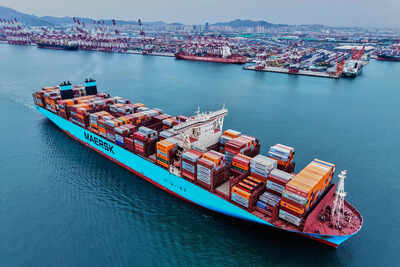
China exports: Global shipments rose 4.8% in May; inflow to US falls nearly 35% amid trade talks
[ad_1] China’s export growth lost momentum in May, rising 4.8% year-on-year, a sharp slowdown from the 8.1% surge recorded in April, as per the customs data released on Monday.The deceleration came amid a sharp drop in shipments to the United States, down 35% year-on-year, as tensions between the two economic giants continued to cloud trade prospects.The figures were released just hours ahead of another round of US-China trade negotiations scheduled for later in the day, in London. These talks come after a phone call between US President Donald Trump and Chinese President Xi Jinping last week. Zichun Huang of Capital Economics anticipated exports growth to revive in June, thanks to a 90-day suspension on most of the tariffs the two countries have imposed on each other.China’s imports also fell in May, down 3.4% year-on-year, leaving the country with a trade […]
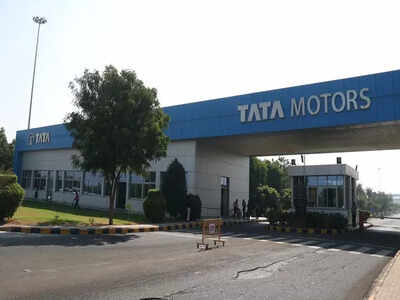
Tata Motors future plans: Rs 33,000-35,000 crore investment to boost passenger vehicles; hoping to lead in EV segment
[ad_1] Automaking giant Tata Motors is planning massive investment plans for the future, earmarking Rs 33,000 crore to Rs 35,000 crore for FY 26-30 on product actions. The Mumbai-headquartered company is targeting 30 product actions, including the launch of seven new models, as it looks to sharpen its competitive edge in India’s fast-evolving passenger vehicle (PV) market.As part of its long-term strategy, the automaker aims to secure a 16% market share, including electric vehicles (EVs), by FY27, rising to 18–20% over the next few years. Tata Motors expects the domestic PV industry to hit annual sales of 60 lakh units by 2030 and is positioning itself to ride that wave with a refreshed and expansive portfolio.“Looking ahead, we will strengthen our portfolio by FY30...7 new nameplates and 23 product refreshes will holistically enhance the portfolio,” the company told analysts in […]
Related

US Tariffs vs. India’s Trade Diplomacy: How New Alliances Are Shaping
India’s global trade playbook has shifted abruptly in 2025. The US recently imposed tariffs as high as 50% on Indian exports, citing New Delhi’s continued oil imports from Russia. The immediate fallout was brutal: the rupee sank to a record low, and Indian markets felt the shock. For a country that built its post-1991 trajectory on closer US ties, this tariff punch could have been destabilising. Instead, India is doubling down on multi-alignment diplomacy — diversifying trade and diplomatic engagement with Japan, China, Russia, and the SCO bloc. Why tariffs hit hard The US remains a top destination for Indian goods — from IT services to textiles. Tariffs of this magnitude erode competitiveness and raise uncertainty for exporters. Analysts warn of job impacts in labour-intensive sectors. The rupee’s plunge to historic lows only underscored the vulnerability. India’s counter-strategy Japan: Securing […]

Reliance AGM 2025: Jio IPO Timeline, New AI Subsidiary, and What It Means
Reliance Industries’ AGM has again doubled as India’s tech-policy bellwether. The biggest headline: Jio will file for an IPO in the first half of 2026, a move that could be among the largest listings on Dalal Street and a pivotal unlock of value for Reliance shareholders. In parallel, the company announced a dedicated AI subsidiary aimed at building domestic AI infrastructure and services. Reutersmint+1NDTV Profit Jio IPO: Why the timing matters Analysts have long argued that Jio’s value is partially buried within the conglomerate structure. A separate listing could surface value for a digital-and-telecom pure play with 500M+ users, deep fiber, and growing home broadband. International coverage pegs potential valuations in the eleven-digit-USD range if growth and ARPU trends hold through 2026. The listing window — H1 2026 — provides time to polish metrics, expand revenue lines (enterprise, broadband, OTT), […]

E20 Petrol in India: Green Revolution or Hidden Scam?
For the past few years, India has been pushing hard towards adopting alternative fuels and reducing its dependency on imported crude oil. One of the most talked-about initiatives is the rollout of E20 petrol, which is a blend of 80% petrol and 20% ethanol. On paper, this looks like a revolutionary step — it’s designed to reduce carbon emissions, cut down fuel imports, and boost ethanol demand that directly benefits Indian farmers. But there’s a rising question among common people: If E20 petrol contains only 80% petrol, why are we still paying the same price as regular petrol? Shouldn’t the price be lower since 20% of the mix is ethanol, which is significantly cheaper to produce compared to crude oil-based petrol? This is where many start suspecting that the promotion of E20 might not be as transparent as it seems. […]
Luxury skincare expansion: L’Oreal acquires majority stake in Medik8; announces 1 billion Euro deal
[ad_1] Cosmetics maker L’Oreal agreed to acquire a majority stake in British skincare brand Medik8, in a strategic move to strengthen its presence in the booming skincare market. The French beauty giant announced the deal on Monday, though financial terms were not disclosed.The transaction, which sees UK-based private equity firm Inflexion selling its majority holding, reportedly values Medik8 at around 1 billion Euro, according to a source familiar with the matter. Inflexion will retain a minority share, while L’Oreal has secured the option to eventually buy out all remaining shareholders, Reuters reported.“We are delighted to welcome Medik8 to the L’Oréal family. As a premium skincare range, with high levels of proven efficacy at an accessible price point, Medik8 perfectly complements our existing skincare portfolio,” Cyril Chaupuy, president of L’oreal Luxe said.“This acquisition further strengthens L’Oreal’s luxe portfolio, adding a premium […]
270 million pulled out of poverty! How Modi government achieved a remarkable dip in extreme poverty & what’s the road ahead? Explained
[ad_1] India’s GDP has more than doubled in the last decade, and experts believe that this has trickled down to the poorest. (AI image) Marking a big achievement over the last decade, extreme poverty in India has dropped substantially from 27.1% in 2011-12 to 5.3% in 2022-23, according to the latest World Bank data. The remarkable progress under the Narendra Modi government has come despite the World Bank raising its poverty threshold to $3 per person per day from $2.15 per person per day earlier.Incidentally, India’s huge reduction in extreme poverty comes at a time when globally there has been an increase in the number of people below the poverty line. According to a government fact sheet, India has emerged a statistical outlier in the positive direction.The latest data is being seen as a boost in the government’s economic growth […]
Ayodhya land prices: Circle rates revised first time in 8 years; soar up to 200%
[ad_1] For the first time in eight years, Ayodhya has seen a sharp revision in its circle rates, with property prices rising between 30% and 200% across various parts of the district, officials told PTI.The prices are particularly steep within a 10-kilometre radius of the Ram Janmabhoomi Temple, an area witnessing a real estate boom fuelled by religious tourism and rapid infrastructure growth. Here, circle rates have jumped over 150%, pushing land values in the prime zone to Rs 26,600–27,900 per square metre, compared to Rs 6,650–6,975 earlier.Shanti Bhushan Chaubey, sub-registrar of Sadar (Faizabad) tehsil, said the hike followed a proposal submitted last September. “After addressing objections, the new circle rates were approved by District Magistrate Tikaram Funde and have now been enforced,” he said.According to Chaubey, the sharpest hikes were recorded in areas with the most land activity. “Localities […]
Be the first to leave a comment