


About the author

Defend the Airport
[ad_1] Every day, millions of passengers depend on a vast, complex airport ecosystem to get from Point A to Point B. From airline check-ins and baggage handling to air traffic control and terminal operations, the aviation sector is an intricate web of interconnected third-party providers, technologies, and stakeholders. In this high-stakes environment, a cybersecurity breach is not a single point of failure, it’s a ripple effect waiting to happen. Cyber Threats Aren’t Just IT Problems – They’re Operational Crises When people think about airport cybersecurity, they often picture network firewalls at airline headquarters or secure software for booking systems. But the real threat landscape is far broader and far more vulnerable. If a catering supplier is hit with ransomware, the aircraft turnaround slows. If the baggage conveyor system is compromised, luggage piles up, delaying departures. If the security contractor experiences […]

Securing LLMs Against Prompt Injection Attacks
[ad_1] Introduction Large Language Models (LLMs) have rapidly become integral to applications, but they come with some very interesting security pitfalls. Chief among these is prompt injection, where cleverly crafted inputs make an LLM bypass its instructions or leak secrets. Prompt injection in fact is so wildly popular that, OWASP now ranks prompt injection as the #1 AI security risk for modern LLM applications as shown in their OWASP GenAI top 10. We’ve provided a higher-level overview about Prompt Injection in our other blog, so in this one we’ll focus on the concept with the technical audience in mind. Here we’ll explore how LLMs can be vulnerable at the architectural level and the sophisticated ways attackers exploit them. We’ll also examine effective defenses, from system prompt design to “sandwich” prompting techniques. We’ll also discuss a few tools that can help […]

LLM Prompt Injection – What’s the Business Risk, and What to Do About It
[ad_1] The rise of generative AI offers incredible opportunities for businesses. Large Language Models can automate customer service, generate insightful analytics, and accelerate content creation. But alongside these benefits comes a new category of security risk that business leaders must understand: Prompt Injection Attacks. In simple terms, a prompt injection is when someone feeds an AI model malicious or deceptive input that causes it to behave in an unintended, and often harmful way. This isn’t just a technical glitch, it’s a serious threat that can lead to brand embarrassment, data leaks, or compliance violations if not addressed. As organizations rush to adopt AI capabilities, ensuring the security of those AI systems is now a board-level concern. In this post we’ll provide a high-level overview of prompt injection risks, why they matter to your business, and how Security Innovation’s GenAI Penetration […]
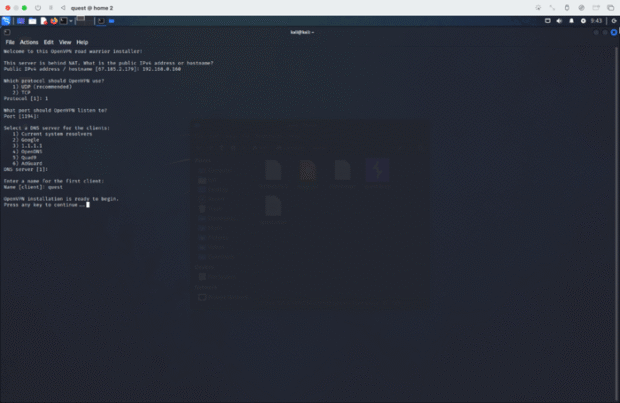
Setting Up a Pentesting Environment for the Meta Quest 2
[ad_1] With the advent of commercially available virtual reality headsets, such as the Meta Quest, the integration of virtual and augmented reality into our daily lives feels closer than ever before. As these devices become more common, so too will the need to secure and protect the data collected and stored by them. The intention of this blog post is to establish a baseline security testing environment for Meta Quest 2 applications and is split into three sections: Enabling Developer Mode, Establishing an Intercepting Proxy, and Injecting Frida Gadget. The Quest 2 runs on a modified version of the Android Open Source Project (AOSP) in addition to proprietary software developed by Meta, allowing the adoption of many established Android testing methods. Enabling Developer Mode The first step of setting up a security testing environment on the Quest is to […]

Earn the US Cyber Trust Mark and Unlock New IoT Growth Opportunities
[ad_1] As an IoT product manufacturer, building consumer trust in the security of your connected devices is critical for driving sales and staying competitive. Fortunately, the Federal Communications Commission (FCC) has introduced a new program to help - the US Cyber Trust Mark. The Cyber Trust Mark is a new voluntary labeling program that is obtained by demonstrating the cybersecurity of your IoT products. By earning this seal of approval, you can demonstrate to your customers that your devices meet rigorous security standards and can be trusted to protect their personal data and connected home. Retailers like Best Buy and Amazon will be collaborating with the FCC to educate consumers on this new program and increase public demand for the Cyber Trust Mark. But achieving the Cyber Trust Mark isn't a simple process. That's where Security Innovation, a Bureau Veritas […]

The Value of OT Penetration Testing
[ad_1] With the increasing cyber threats targeting operational technology (OT) environments, it's more important than ever to proactively assess and strengthen the security of your Industrial Control Systems (ICS). One of the most effective ways to do this is through an OT penetration test. What is an OT Penetration Test? An OT penetration test is a comprehensive security assessment that simulates real-world cyber-attacks against your ICS environment. Experienced security professionals, with deep expertise in both IT and OT systems, will attempt to gain unauthorized access and exploit vulnerabilities within your industrial control networks and devices. The team will provide you with a realistic understanding of your ICS security posture and the potential impact of a successful attack. The Benefits of OT Penetration Testing Uncover Hidden Vulnerabilities: Pen testers will identify vulnerabilities and misconfigurations that may have been overlooked by traditional […]
Related

India’s Tech Roadmap: Chips, Space, and EV Ambitions by 2030
India has long been a hub for IT services, but the new ambition is hardware, space, and mobility. Speaking at the ET World Leadership Forum 2025, Prime Minister Narendra Modi laid out a 2030 vision — India as a semiconductor powerhouse, space tech innovator, and EV leader. Semiconductors: From buyers to makers India plans to establish multiple chip fabs with global partners. The focus: logic chips and memory, not just assembly. A skilled semiconductor workforce program is being rolled out. Space: Aiming higher The roadmap includes ISRO-led lunar and interplanetary missions, with private-sector participation. Space-tech startups will get funding support to commercialize launches and satellite services. India seeks to join the elite club of spacefaring nations in deep space. EV Revolution Target: 50% EV penetration by 2030 in two-wheelers and cars. Push for domestic battery gigafactories. Incentives for both consumers […]

Bharat Forecast System: How India’s New Weather Tech Could Save Lives
Weather impacts 1.3 billion lives in India — from farmers sowing crops to city dwellers braving floods. Until now, forecasts were often too broad or too late. The launch of the Bharat Forecast System (BFS) promises a revolution: hyper-local, AI-driven, 6 km resolution forecasts. Why it matters Agriculture: Farmers get accurate rainfall and drought predictions, vital for crop cycles. Disaster management: Floods, cyclones, and heatwaves can be predicted earlier, saving lives. Urban planning: Cities can prepare for flash floods, smog, or temperature surges. How it works The BFS integrates: High-resolution satellite data Machine learning models for climate prediction 6 km x 6 km grids across India, offering unprecedented local detail Benefits Farmers: Better crop planning, reduced losses. Insurance sector: More accurate risk modelling. Public safety: Early warnings for vulnerable zones. Challenges Last-mile delivery: Forecasts must reach rural communities in local […]

OnePlus 13R: Smarter with OnePlus AI and Lifetime Display Warranty
OnePlus 13R: Smarter with OnePlus AI and Lifetime Display Warranty The OnePlus 13R marks a significant leap forward in the mid-premium smartphone category, offering flagship-grade hardware, next-gen AI capabilities, and an industry-first Lifetime Display Warranty. Designed to empower productivity, creativity, and reliability, the 13R redefines what users should expect from a smartphone in 2025. 🧠 Revolutionary OnePlus AI Integration The standout feature of the OnePlus 13R is undoubtedly its deep AI integration. Unlike gimmicky software tricks, OnePlus AI genuinely enhances everyday interactions and performance through intelligent automation and contextual understanding. 🔍 Intelligent Search: Ask and You Shall Find With OnePlus AI’s Intelligent Search, the way users interact with their phones is reimagined. You can ask natural, conversational questions like: "What’s the dress code for Friday's dinner?""How much did I spend on groceries this month?" The AI scans across your calendar, […]
Defend the Airport
[ad_1] Every day, millions of passengers depend on a vast, complex airport ecosystem to get from Point A to Point B. From airline check-ins and baggage handling to air traffic control and terminal operations, the aviation sector is an intricate web of interconnected third-party providers, technologies, and stakeholders. In this high-stakes environment, a cybersecurity breach is not a single point of failure, it’s a ripple effect waiting to happen. Cyber Threats Aren’t Just IT Problems – They’re Operational Crises When people think about airport cybersecurity, they often picture network firewalls at airline headquarters or secure software for booking systems. But the real threat landscape is far broader and far more vulnerable. If a catering supplier is hit with ransomware, the aircraft turnaround slows. If the baggage conveyor system is compromised, luggage piles up, delaying departures. If the security contractor experiences […]
Securing LLMs Against Prompt Injection Attacks
[ad_1] Introduction Large Language Models (LLMs) have rapidly become integral to applications, but they come with some very interesting security pitfalls. Chief among these is prompt injection, where cleverly crafted inputs make an LLM bypass its instructions or leak secrets. Prompt injection in fact is so wildly popular that, OWASP now ranks prompt injection as the #1 AI security risk for modern LLM applications as shown in their OWASP GenAI top 10. We’ve provided a higher-level overview about Prompt Injection in our other blog, so in this one we’ll focus on the concept with the technical audience in mind. Here we’ll explore how LLMs can be vulnerable at the architectural level and the sophisticated ways attackers exploit them. We’ll also examine effective defenses, from system prompt design to “sandwich” prompting techniques. We’ll also discuss a few tools that can help […]
LLM Prompt Injection – What’s the Business Risk, and What to Do About It
[ad_1] The rise of generative AI offers incredible opportunities for businesses. Large Language Models can automate customer service, generate insightful analytics, and accelerate content creation. But alongside these benefits comes a new category of security risk that business leaders must understand: Prompt Injection Attacks. In simple terms, a prompt injection is when someone feeds an AI model malicious or deceptive input that causes it to behave in an unintended, and often harmful way. This isn’t just a technical glitch, it’s a serious threat that can lead to brand embarrassment, data leaks, or compliance violations if not addressed. As organizations rush to adopt AI capabilities, ensuring the security of those AI systems is now a board-level concern. In this post we’ll provide a high-level overview of prompt injection risks, why they matter to your business, and how Security Innovation’s GenAI Penetration […]