
[ad_1]

BENGALURU: In India’s newest retail experiment, the question isn’t just what consumers want – but how fast they want it. A cluster of startups and incumbents, including Slikk Club, Myntra MNow, Rocketzone, and Blip, are re-engineering fashion ecommerce for hyperlocal speed, compressing the timeline between trend discovery and doorstep delivery to as little as 30 minutes.
This emerging sector, which blends rapid fulfilment with curated selection, borrows from both social media and supply chain playbooks. Platforms drop limited-time edits tailored to micro trends and urban context, often inspired by influencers or viral aesthetics. Inventory is held in dark stores, local warehouses, or hyperlocal offline retailers, optimised not for breadth but for relevance and turnover.
“It’s a shift from variety to velocity,” says Angshuman Bhattacharya, partner and national leader of the consumer products and retail sector in EY. “Quick commerce is already proving viable for essentials like innerwear and accessories. In fashion, it will hinge on SKU discipline and a functional selection to keep returns manageable.”
Returns – long a friction point in online fashion – are engineered differently in these models. Slikk Club, for instance, offers instant pickups and refunds, turning the traditional seven-day cycle into a same-hour loop. “The experience isn’t just fast – it’s complete,” its co-founder Akshay Gulati said. “We control inventory end-to-end, enabling a customer to try, return, and reorder within minutes.” The platform works with over 80 brands and maintains 40–50% monthly sell-through in Bengaluru, with an average order value upwards of Rs 2,000.
Larger players are taking note. Myntra’s MNow leverages its legacy infrastructure to offer 30-minute delivery in select metros. “Customers want speed without sacrificing selection,” said Ashish Shukla, VP at Myntra. “We’ve integrated dark stores and predictive algorithms to enable this at scale.” Early results, he says, show lower return rates and higher customer intent.
For smaller entrants, the calculus is different. Rocketzone in North Delhi operates a single warehouse with 250 tightly curated SKUs. “We apply the Pareto principle—serving 80% of demand with 20% of styles,” said its founder Shivang Taluja.
Blip is positioning itself as a marketplace for live drops, with an approach that fuses discovery, immediacy, and offline retail infrastructure. “We’re trying to build a Zomato for clothes,” says Co-founder Ansh Agarwal. “Consumers don’t want to wait three days for an outfit they saw five minutes ago on Instagram. They want to try it the same day — maybe even the same hour.”
Blip currently partners with about 10 house-of-brand conglomerates, including Raymond, Anita Dongre, Metro, Celio, and United Colors of Benetton, and plans to double that soon. Its commission-based model relies on existing retail inventory rather than dark stores. “We don’t touch warehousing. We work with physical stores and enable them to plug into last-mile logistics. It’s faster and leaner,” Agarwal said. By integrating live location tracking, Blip aims to solve pain points across both urban and remote zones. Returns are allowed within a two-hour window, after which exchanges happen in-store.
“Most ecommerce platforms still operate on a 2010s mindset — build big catalogues and push offers. We’re betting on context, curation, and conversion at speed,” Agarwal added. “The moment you shorten the time between intent and ownership, behaviour changes. We see fewer returns and more repeat usage.”
Yet the infrastructure cost of immediacy remains steep. “Fashion logistics isn’t just delivery — it’s quality control, ironing, packaging,” Bhattacharya points out. Without scale or operational rigour, most models risk burn without break-even.
Some are tackling this through narrower verticals. Shoemato, focused on footwear, promises synchronised trials across sellers in 60 minutes. “No one else is co-ordinating multi-brand try-ons with live delivery,” said its founder Vishal Nathani. The company plans to operate as a service layer for existing retailers, rather than a consumer-facing brand.
Despite their differences, these ventures share a thesis: that urban consumers will pay — if not in rupees, then in loyalty and frequency — for speed and convenience. As platforms invest in infrastructure, algorithms, and partnerships, the real innovation may lie less in logistics than in reshaping how fashion is discovered, sold, and consumed in real time. What remains to be seen is not whether instant fashion can scale, but whether it can do so with profitability and precision. If successful, it won’t just rewrite ecommerce — it could redraw the boundaries of modern retail.
[ad_2]
Source link


About the author

Modi’s Asia Double Play: Japan Now, China Next — What India Wants (and Risks)
ndia has kicked off a tightly choreographed Asia tour at a delicate moment. Prime Minister Narendra Modi is in Tokyo first, meeting Japan’s Prime Minister Shigeru Ishiba, before flying to Tianjin for the SCO summit hosted by China. The sequencing matters: Japan is a steadfast strategic and economic partner; China is a rival with whom India still needs a functional modus vivendi. The backdrop? Up to 50% US tariffs on Indian exports, which raise the premium on diversified trade and investment ties. ReutersAP NewsThe Times of IndiaThe Guardian Why Japan first Tokyo and New Delhi are doubling down on a “special strategic and global partnership” built over two decades. Expect deliverables in economic security (critical minerals, supply chains), high-tech collaboration, and infrastructure. Reports suggest the leaders are setting a decade-long joint vision and pushing private-sector investment goals alongside people-to-people exchanges […]

Luxury skincare expansion: L’Oreal acquires majority stake in Medik8; announces 1 billion Euro deal
[ad_1] Cosmetics maker L’Oreal agreed to acquire a majority stake in British skincare brand Medik8, in a strategic move to strengthen its presence in the booming skincare market. The French beauty giant announced the deal on Monday, though financial terms were not disclosed.The transaction, which sees UK-based private equity firm Inflexion selling its majority holding, reportedly values Medik8 at around 1 billion Euro, according to a source familiar with the matter. Inflexion will retain a minority share, while L’Oreal has secured the option to eventually buy out all remaining shareholders, Reuters reported.“We are delighted to welcome Medik8 to the L’Oréal family. As a premium skincare range, with high levels of proven efficacy at an accessible price point, Medik8 perfectly complements our existing skincare portfolio,” Cyril Chaupuy, president of L’oreal Luxe said.“This acquisition further strengthens L’Oreal’s luxe portfolio, adding a premium […]

270 million pulled out of poverty! How Modi government achieved a remarkable dip in extreme poverty & what’s the road ahead? Explained
[ad_1] India’s GDP has more than doubled in the last decade, and experts believe that this has trickled down to the poorest. (AI image) Marking a big achievement over the last decade, extreme poverty in India has dropped substantially from 27.1% in 2011-12 to 5.3% in 2022-23, according to the latest World Bank data. The remarkable progress under the Narendra Modi government has come despite the World Bank raising its poverty threshold to $3 per person per day from $2.15 per person per day earlier.Incidentally, India’s huge reduction in extreme poverty comes at a time when globally there has been an increase in the number of people below the poverty line. According to a government fact sheet, India has emerged a statistical outlier in the positive direction.The latest data is being seen as a boost in the government’s economic growth […]

Ayodhya land prices: Circle rates revised first time in 8 years; soar up to 200%
[ad_1] For the first time in eight years, Ayodhya has seen a sharp revision in its circle rates, with property prices rising between 30% and 200% across various parts of the district, officials told PTI.The prices are particularly steep within a 10-kilometre radius of the Ram Janmabhoomi Temple, an area witnessing a real estate boom fuelled by religious tourism and rapid infrastructure growth. Here, circle rates have jumped over 150%, pushing land values in the prime zone to Rs 26,600–27,900 per square metre, compared to Rs 6,650–6,975 earlier.Shanti Bhushan Chaubey, sub-registrar of Sadar (Faizabad) tehsil, said the hike followed a proposal submitted last September. “After addressing objections, the new circle rates were approved by District Magistrate Tikaram Funde and have now been enforced,” he said.According to Chaubey, the sharpest hikes were recorded in areas with the most land activity. “Localities […]

China exports: Global shipments rose 4.8% in May; inflow to US falls nearly 35% amid trade talks
[ad_1] China’s export growth lost momentum in May, rising 4.8% year-on-year, a sharp slowdown from the 8.1% surge recorded in April, as per the customs data released on Monday.The deceleration came amid a sharp drop in shipments to the United States, down 35% year-on-year, as tensions between the two economic giants continued to cloud trade prospects.The figures were released just hours ahead of another round of US-China trade negotiations scheduled for later in the day, in London. These talks come after a phone call between US President Donald Trump and Chinese President Xi Jinping last week. Zichun Huang of Capital Economics anticipated exports growth to revive in June, thanks to a 90-day suspension on most of the tariffs the two countries have imposed on each other.China’s imports also fell in May, down 3.4% year-on-year, leaving the country with a trade […]
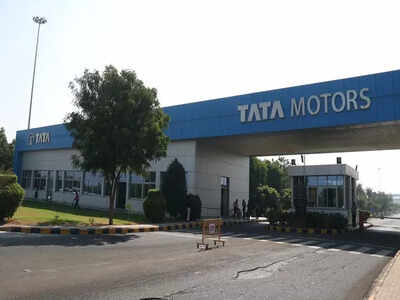
Tata Motors future plans: Rs 33,000-35,000 crore investment to boost passenger vehicles; hoping to lead in EV segment
[ad_1] Automaking giant Tata Motors is planning massive investment plans for the future, earmarking Rs 33,000 crore to Rs 35,000 crore for FY 26-30 on product actions. The Mumbai-headquartered company is targeting 30 product actions, including the launch of seven new models, as it looks to sharpen its competitive edge in India’s fast-evolving passenger vehicle (PV) market.As part of its long-term strategy, the automaker aims to secure a 16% market share, including electric vehicles (EVs), by FY27, rising to 18–20% over the next few years. Tata Motors expects the domestic PV industry to hit annual sales of 60 lakh units by 2030 and is positioning itself to ride that wave with a refreshed and expansive portfolio.“Looking ahead, we will strengthen our portfolio by FY30...7 new nameplates and 23 product refreshes will holistically enhance the portfolio,” the company told analysts in […]
Related

US Tariffs vs. India’s Trade Diplomacy: How New Alliances Are Shaping
India’s global trade playbook has shifted abruptly in 2025. The US recently imposed tariffs as high as 50% on Indian exports, citing New Delhi’s continued oil imports from Russia. The immediate fallout was brutal: the rupee sank to a record low, and Indian markets felt the shock. For a country that built its post-1991 trajectory on closer US ties, this tariff punch could have been destabilising. Instead, India is doubling down on multi-alignment diplomacy — diversifying trade and diplomatic engagement with Japan, China, Russia, and the SCO bloc. Why tariffs hit hard The US remains a top destination for Indian goods — from IT services to textiles. Tariffs of this magnitude erode competitiveness and raise uncertainty for exporters. Analysts warn of job impacts in labour-intensive sectors. The rupee’s plunge to historic lows only underscored the vulnerability. India’s counter-strategy Japan: Securing […]

Reliance AGM 2025: Jio IPO Timeline, New AI Subsidiary, and What It Means
Reliance Industries’ AGM has again doubled as India’s tech-policy bellwether. The biggest headline: Jio will file for an IPO in the first half of 2026, a move that could be among the largest listings on Dalal Street and a pivotal unlock of value for Reliance shareholders. In parallel, the company announced a dedicated AI subsidiary aimed at building domestic AI infrastructure and services. Reutersmint+1NDTV Profit Jio IPO: Why the timing matters Analysts have long argued that Jio’s value is partially buried within the conglomerate structure. A separate listing could surface value for a digital-and-telecom pure play with 500M+ users, deep fiber, and growing home broadband. International coverage pegs potential valuations in the eleven-digit-USD range if growth and ARPU trends hold through 2026. The listing window — H1 2026 — provides time to polish metrics, expand revenue lines (enterprise, broadband, OTT), […]

E20 Petrol in India: Green Revolution or Hidden Scam?
For the past few years, India has been pushing hard towards adopting alternative fuels and reducing its dependency on imported crude oil. One of the most talked-about initiatives is the rollout of E20 petrol, which is a blend of 80% petrol and 20% ethanol. On paper, this looks like a revolutionary step — it’s designed to reduce carbon emissions, cut down fuel imports, and boost ethanol demand that directly benefits Indian farmers. But there’s a rising question among common people: If E20 petrol contains only 80% petrol, why are we still paying the same price as regular petrol? Shouldn’t the price be lower since 20% of the mix is ethanol, which is significantly cheaper to produce compared to crude oil-based petrol? This is where many start suspecting that the promotion of E20 might not be as transparent as it seems. […]
Luxury skincare expansion: L’Oreal acquires majority stake in Medik8; announces 1 billion Euro deal
[ad_1] Cosmetics maker L’Oreal agreed to acquire a majority stake in British skincare brand Medik8, in a strategic move to strengthen its presence in the booming skincare market. The French beauty giant announced the deal on Monday, though financial terms were not disclosed.The transaction, which sees UK-based private equity firm Inflexion selling its majority holding, reportedly values Medik8 at around 1 billion Euro, according to a source familiar with the matter. Inflexion will retain a minority share, while L’Oreal has secured the option to eventually buy out all remaining shareholders, Reuters reported.“We are delighted to welcome Medik8 to the L’Oréal family. As a premium skincare range, with high levels of proven efficacy at an accessible price point, Medik8 perfectly complements our existing skincare portfolio,” Cyril Chaupuy, president of L’oreal Luxe said.“This acquisition further strengthens L’Oreal’s luxe portfolio, adding a premium […]
270 million pulled out of poverty! How Modi government achieved a remarkable dip in extreme poverty & what’s the road ahead? Explained
[ad_1] India’s GDP has more than doubled in the last decade, and experts believe that this has trickled down to the poorest. (AI image) Marking a big achievement over the last decade, extreme poverty in India has dropped substantially from 27.1% in 2011-12 to 5.3% in 2022-23, according to the latest World Bank data. The remarkable progress under the Narendra Modi government has come despite the World Bank raising its poverty threshold to $3 per person per day from $2.15 per person per day earlier.Incidentally, India’s huge reduction in extreme poverty comes at a time when globally there has been an increase in the number of people below the poverty line. According to a government fact sheet, India has emerged a statistical outlier in the positive direction.The latest data is being seen as a boost in the government’s economic growth […]
Ayodhya land prices: Circle rates revised first time in 8 years; soar up to 200%
[ad_1] For the first time in eight years, Ayodhya has seen a sharp revision in its circle rates, with property prices rising between 30% and 200% across various parts of the district, officials told PTI.The prices are particularly steep within a 10-kilometre radius of the Ram Janmabhoomi Temple, an area witnessing a real estate boom fuelled by religious tourism and rapid infrastructure growth. Here, circle rates have jumped over 150%, pushing land values in the prime zone to Rs 26,600–27,900 per square metre, compared to Rs 6,650–6,975 earlier.Shanti Bhushan Chaubey, sub-registrar of Sadar (Faizabad) tehsil, said the hike followed a proposal submitted last September. “After addressing objections, the new circle rates were approved by District Magistrate Tikaram Funde and have now been enforced,” he said.According to Chaubey, the sharpest hikes were recorded in areas with the most land activity. “Localities […]
Be the first to leave a comment