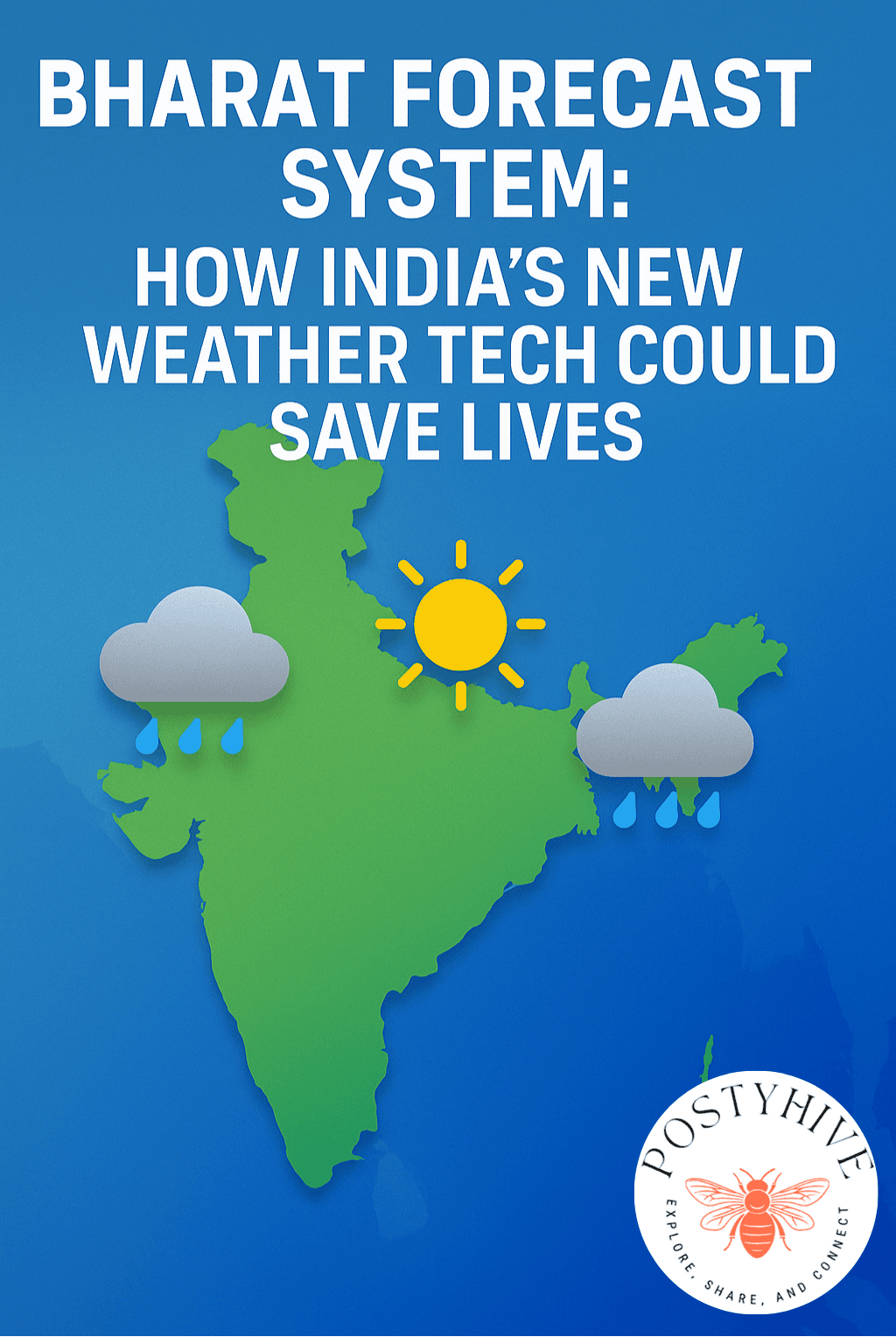
Weather impacts 1.3 billion lives in India — from farmers sowing crops to city dwellers braving floods. Until now, forecasts were often too broad or too late. The launch of the Bharat Forecast System (BFS) promises a revolution: hyper-local, AI-driven, 6 km resolution forecasts.
Why it matters
-
Agriculture: Farmers get accurate rainfall and drought predictions, vital for crop cycles.
-
Disaster management: Floods, cyclones, and heatwaves can be predicted earlier, saving lives.
-
Urban planning: Cities can prepare for flash floods, smog, or temperature surges.
How it works
The BFS integrates:
-
High-resolution satellite data
-
Machine learning models for climate prediction
-
6 km x 6 km grids across India, offering unprecedented local detail
Benefits
-
Farmers: Better crop planning, reduced losses.
-
Insurance sector: More accurate risk modelling.
-
Public safety: Early warnings for vulnerable zones.
Challenges
-
Last-mile delivery: Forecasts must reach rural communities in local languages.
-
Tech adoption: Farmers need digital tools to access and use this data.
-
Climate uncertainty: Extreme weather patterns can still surprise even advanced models.
Bottom line: The Bharat Forecast System is more than a tech upgrade — it’s a climate resilience tool that could redefine how India lives with the monsoon.
Hashtags:
#BharatForecastSystem #WeatherTech #ClimateIndia #DisasterResponse #MonsoonForecast #PostyHive
10) The 130th Amendment Bill: Politics, Power, and Democracy in India
Meta Description:
India’s proposed 130th Constitutional Amendment introduces rules on the removal of PMs & CMs after detention, sparking debate on governance and democracy.
India’s Constitution has been amended 129 times since independence. Now, the 130th Amendment Bill is in focus — and it’s controversial. The bill proposes that if a Prime Minister, Chief Minister, or other top executive is detained for more than 30 days, they automatically lose their position.
Why this matters
-
It targets situations where leaders under investigation or detention continue holding office.
-
Supporters say it strengthens accountability and prevents misuse of power.
-
Critics argue it could be weaponized politically — a tool to unseat opponents through legal manoeuvres.
Key provisions
-
Automatic removal after 30 days of detention.
-
By-elections or new leadership votes triggered immediately.
-
Applies to both central and state levels.
The debate
-
Pro side: Enhances trust in democracy, prevents leaders from clinging to power while facing serious charges.
-
Con side: Could destabilize governance if leaders are removed without trial outcomes, risking abuse.
Broader context
This bill reflects India’s ongoing tension between political stability and accountability. With corruption cases, CBI raids, and ED probes often hitting headlines, the question is whether this amendment strengthens democracy or risks turning law into politics.
Global parallels
-
Italy & Israel have laws barring indicted leaders from holding office.
-
UK & US rely more on party or parliamentary pressure than automatic disqualification.
Bottom line: The 130th Amendment could be a watershed moment for governance — either a genuine reform for accountability or a slippery slope of political misuse.
#130thAmendment #IndianConstitution #DemocracyIndia #Governance #PoliticsIndia #PostyHive


About the author
18 Best AI Tools for Small Business in 2026 (Free + Paid)
💼 Small Business · AI Tools 18 Best AI Tools for Small Business in 2026 (Free + Paid — Tested & Ranked) 📅 May 31, 2026 | ⏱ 11 min read | ✍️ PostyHives Team 57% of small businesses are already using AI — and those that are saving an average of 5.6 hours every week. Here are the 18 best AI tools that will actually make a difference for your business in 2026. 🔑 Focus Keyphrase: best AI tools for small business | 📊 Search Volume: High (90K+/mo) | 💰 Keyword Difficulty: Medium | 🎯 Intent: Commercial / Informational 📋 Table of Contents Why Small Businesses Need AI Tools in 2026 Best AI Tools for Content & Writing Best AI Tools for Marketing & Social Media Best AI Tools for Customer Service Best AI Tools for Productivity & Meetings […]

US Tariffs vs. India’s Trade Diplomacy: How New Alliances Are Shaping
India’s global trade playbook has shifted abruptly in 2025. The US recently imposed tariffs as high as 50% on Indian exports, citing New Delhi’s continued oil imports from Russia. The immediate fallout was brutal: the rupee sank to a record low, and Indian markets felt the shock. For a country that built its post-1991 trajectory on closer US ties, this tariff punch could have been destabilising. Instead, India is doubling down on multi-alignment diplomacy — diversifying trade and diplomatic engagement with Japan, China, Russia, and the SCO bloc. Why tariffs hit hard The US remains a top destination for Indian goods — from IT services to textiles. Tariffs of this magnitude erode competitiveness and raise uncertainty for exporters. Analysts warn of job impacts in labour-intensive sectors. The rupee’s plunge to historic lows only underscored the vulnerability. India’s counter-strategy Japan: Securing […]

Bharat Forecast System: How India’s New Weather Tech Could Save Lives
Weather impacts 1.3 billion lives in India — from farmers sowing crops to city dwellers braving floods. Until now, forecasts were often too broad or too late. The launch of the Bharat Forecast System (BFS) promises a revolution: hyper-local, AI-driven, 6 km resolution forecasts. Why it matters Agriculture: Farmers get accurate rainfall and drought predictions, vital for crop cycles. Disaster management: Floods, cyclones, and heatwaves can be predicted earlier, saving lives. Urban planning: Cities can prepare for flash floods, smog, or temperature surges. How it works The BFS integrates: High-resolution satellite data Machine learning models for climate prediction 6 km x 6 km grids across India, offering unprecedented local detail Benefits Farmers: Better crop planning, reduced losses. Insurance sector: More accurate risk modelling. Public safety: Early warnings for vulnerable zones. Challenges Last-mile delivery: Forecasts must reach rural communities in local […]

Rising Diabetes Cases in India: Alarming Trends & Preventive Measures
India is experiencing a sharp rise in diabetes cases, making it one of the biggest health concerns in the country. The latest reports suggest that over 101 million people in India are now living with diabetes, a number that has doubled in the past decade. With lifestyle changes, urbanization, and genetic predisposition playing a major role, this crisis demands immediate attention. The Growing Diabetes Epidemic in India According to a study by ICMR-INDIAB, diabetes prevalence has reached 11.4% among adults. Urban areas are more affected, but rural regions are also witnessing a surge. The major reasons contributing to this alarming rise include: Unhealthy diets rich in processed foods and refined sugars Sedentary lifestyles leading to obesity Stress and lack of sleep affect insulin regulation Genetic predisposition and family history of diabetes Impact on Public Health The rising cases of diabetes […]
The Rise of Regional Parties in Indian Politics
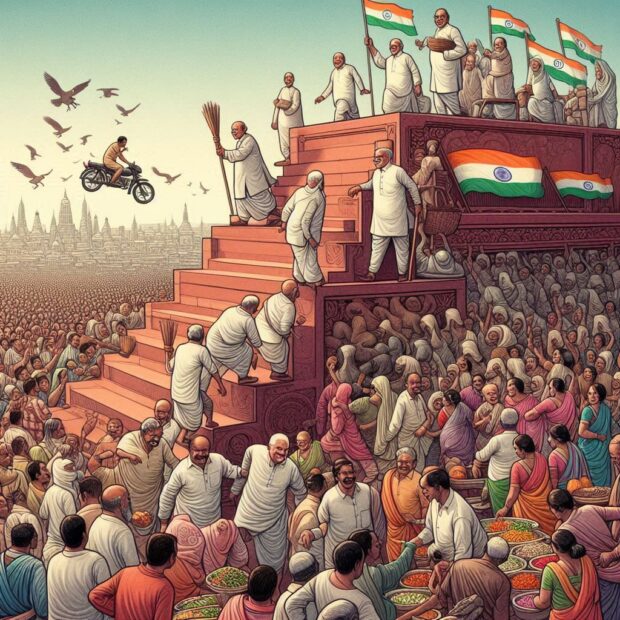
Regional parties have become a significant force in Indian politics, challenging the dominance of national parties like the Bharatiya Janata Party (BJP) and the Indian National Congress (INC). From DMK in Tamil Nadu to Trinamool Congress in West Bengal, regional parties are playing a crucial role in shaping India’s political landscape. Why are Regional Parties Gaining Prominence? Local Issues: Regional parties focus on local issues like language, culture, and development, resonating with voters. Coalition Politics: In a fragmented political scenario, regional parties often hold the key to forming governments at the center. Strong Leadership: Leaders like Mamata Banerjee and M.K. Stalin have built strong regional identities and voter bases. Impact on National Politics Policy Influence: Regional parties often influence national policies, especially in areas like agriculture, education, and healthcare. Federalism: The rise of regional parties has strengthened India’s federal structure by giving states more autonomy. Coalition Governments: Regional parties […]
US Indictment of Gautam Adani Puts India Inc.’s Reputation on Trial
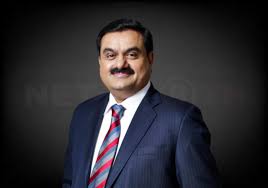
Gautam Adani, one of India’s most prominent industrialists, is facing serious legal challenges following his recent indictment in the United States, raising concerns over corporate governance practices in India. The legal troubles of Adani, who heads the Adani Group, a conglomerate with significant business interests across sectors like energy, infrastructure, and mining, have put the entire India Inc. under a global spotlight. The indictment not only targets Adani personally but also questions the regulatory environment and business practices in India, leaving the country’s corporate reputation in jeopardy. The Indictment and Its Ramifications The US indictment follows a series of accusations involving stock manipulation and fraud, stemming from the activities of the Adani Group. These allegations are significant because they implicate not just Adani but also several key players within the company, suggesting a pattern of corporate mismanagement and potential illegal […]
Related

What Are AI Agents? The Complete Guide for 2026
🤖 Artificial Intelligence What Are AI Agents? The Complete Guide for 2026 📅 June 2026 | ⏱ 9 min read AI agents are the biggest shift in artificial intelligence since ChatGPT. Unlike chatbots that answer questions, AI agents take actions — browsing the web, writing code, sending emails, and completing multi-step tasks autonomously. In 2026, they are changing how we work forever. What Makes AI Agents Different from Chatbots A chatbot responds to what you ask. An AI agent pursues a goal. When you tell an AI agent "book me a flight to London next Tuesday under $500", it searches flight sites, compares prices, finds the best option, and presents it ready to book — all on its own. It plans, executes, checks results, and retries when something fails. How AI Agents Work Perception: The agent observes its environment — […]
18 Best AI Tools for Small Business in 2026 (Free + Paid)
💼 Small Business · AI Tools 18 Best AI Tools for Small Business in 2026 (Free + Paid — Tested & Ranked) 📅 May 31, 2026 | ⏱ 11 min read | ✍️ PostyHives Team 57% of small businesses are already using AI — and those that are saving an average of 5.6 hours every week. Here are the 18 best AI tools that will actually make a difference for your business in 2026. 🔑 Focus Keyphrase: best AI tools for small business | 📊 Search Volume: High (90K+/mo) | 💰 Keyword Difficulty: Medium | 🎯 Intent: Commercial / Informational 📋 Table of Contents Why Small Businesses Need AI Tools in 2026 Best AI Tools for Content & Writing Best AI Tools for Marketing & Social Media Best AI Tools for Customer Service Best AI Tools for Productivity & Meetings […]
AI Agents in 2026: What They Are, How They Work & Why They’ll Change Everything
🔥 Trending in 2026 AI Agents in 2026: What They Are, How They Work & Why They'll Change Everything 📅 May 31, 2026 | ⏱ 9 min read | ✍️ PostyHives Team AI agents are no longer science fiction. In 2026, they're running customer service desks, writing code, managing emails, and executing complex business workflows — autonomously. Here's everything you need to know. 📋 Table of Contents What Are AI Agents? (Simple Definition) Agentic AI vs. Chatbots: What's the Difference? How Do AI Agents Work? AI Agent Stats You Need to Know in 2026 Top AI Agent Use Cases Across Industries Best AI Agent Tools in 2026 How to Get Started with AI Agents Frequently Asked Questions What Are AI Agents? (Simple Definition) An AI agent is a software system that can autonomously perceive its environment, reason about problems, make […]

“Have Three Children”: RSS Chief’s Call and the Demographic Debate
In a speech marking the 100th anniversary of the RSS, chief Mohan Bhagwat urged families to have three children, arguing that India should keep its population “controlled, yet sufficient.” The remarks arrive just as India’s fertility rate drops below 2 children per woman, a modern low that aligns with global trends but has sparked debate on jobs, ageing, and social policy. Reuters The numbers behind the noise Recent estimates show India’s total fertility rate slipping under replacement level, with declines visible across communities, including Muslims. That may ease long-term population growth but raises fresh questions: can India’s economy create enough productive, high-skill jobs before the demographic dividend fades? And how does the state balance women’s workforce participation, childcare, and elder care as society ages? Reuters Why this call, why now? Proponents say a below-replacement TFR risks labour shortages in some […]

India’s Tech Roadmap: Chips, Space, and EV Ambitions by 2030
India has long been a hub for IT services, but the new ambition is hardware, space, and mobility. Speaking at the ET World Leadership Forum 2025, Prime Minister Narendra Modi laid out a 2030 vision — India as a semiconductor powerhouse, space tech innovator, and EV leader. Semiconductors: From buyers to makers India plans to establish multiple chip fabs with global partners. The focus: logic chips and memory, not just assembly. A skilled semiconductor workforce program is being rolled out. Space: Aiming higher The roadmap includes ISRO-led lunar and interplanetary missions, with private-sector participation. Space-tech startups will get funding support to commercialize launches and satellite services. India seeks to join the elite club of spacefaring nations in deep space. EV Revolution Target: 50% EV penetration by 2030 in two-wheelers and cars. Push for domestic battery gigafactories. Incentives for both consumers […]

Online Gaming Regulation in India: New Law, New Rules of Play
India’s gaming sector has grown explosively in the last decade, from casual mobile titles to real-money fantasy leagues. But the line between skill-based gaming, betting, and addiction has long been blurred. Enter the Promotion and Regulation of Online Gaming Act, 2025, a landmark law that seeks to clean up, regulate, and reshape the industry. What the Act says Bans real-money betting & gambling apps that promote wagering. Encourages e-sports as a recognized category, with tax breaks and infrastructure support. Introduces age-gating and parental controls to protect minors. Mandatory registration for gaming companies, ensuring accountability. Why it matters India is the second-largest gaming market by users, but regulatory uncertainty kept investors cautious. This Act provides clarity — splitting “gaming” from “gambling.” For gamers, it could mean more tournaments, better prize pools, and career paths in e-sports. For companies, a clearer compliance […]
Be the first to leave a comment